

WriteSea

Career Centers Have a Visibility Problem — Here’s How to Fix It

Share this article

In this article

image 1
image

Introducing The Write Way: Your Weekly Career Innovation Digest

Join 1,000+ career services professionals who receive industry news, the latest trends, and insights on AI every single week straight to their inbox.

New Banner 55

Introduction: It’s Not an Effort Problem — It’s a Visibility Problem

Career center directors often hear the same frustration:

“We’re offering programs, workshops, appointments — so why aren’t students engaging?”
The answer isn’t apathy. Research consistently shows students value career outcomes and employability preparation (NACE, 2024). Yet participation in career services remains uneven across campuses.

The problem is structural visibility.

When services are positioned as optional, peripheral, or late-stage support, students mentally categorize them as “not urgent.” Student engagement research shows that visibility, integration, and perceived relevance strongly influence participation in campus services (Kuh, 2008).

Career centers don’t have a motivation problem.

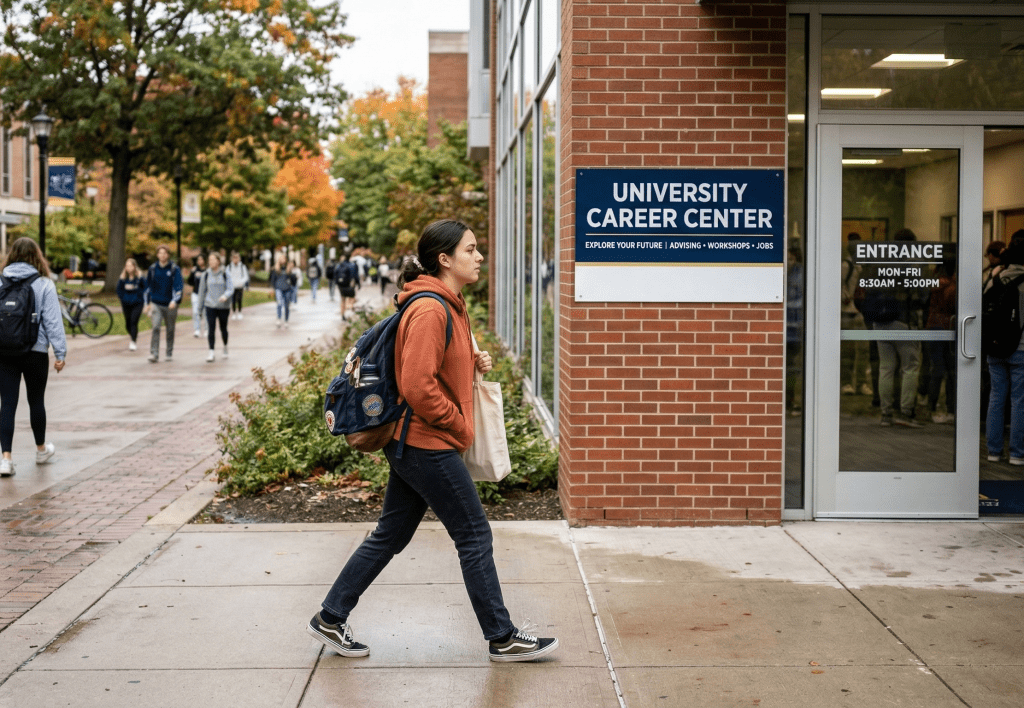
They have a campus positioning problem.

1. Why Students Misunderstand Career Services

Gemini Generated Image kl0kcmkl0kcmkl0k
Students often associate career centers with:

  • Resume reviews
  • Senior-year job searches
  • Emergency job placement

This narrow framing reduces perceived relevance for first- and second-year students.
Career development research emphasizes that effective career education includes identity development, skill building, and ongoing career exploration — not just job placement (Bridgstock, Grant-Imaru & McAlpine, 2019).

When services are marketed primarily around job search support, students assume:

“I don’t need this yet.”

WriteSea Pro Tip:

Students engage with what feels immediately relevant. If career services are positioned as future-focused rather than present-focused, visibility declines.

2. Branding Mistakes Career Centers Make

Visibility isn’t just about marketing volume — it’s about brand clarity.

Many career centers communicate in institutional language:

  • “Professional development initiatives”
  • “Career readiness programming”
  • “Workforce integration strategy”

But students interpret services through emotional filters:

  • Will this reduce my uncertainty?
  • Will this help me feel confident?
  • Will this give me an edge?

Student engagement theory highlights that emotional engagement is as critical as cognitive engagement in participation decisions (Kuh, 2008).

If messaging emphasizes internal programs rather than student outcomes, visibility weakens.
Instead of:

“Attend our career development seminar.”

Try:

“Learn how to stand out for internships — even if you don’t have experience.”

Clarity increases perceived value. Perceived value increases participation.

3. Embedding Career Conversations Into Classrooms

One of the strongest predictors of service engagement is academic integration.

When career conversations are embedded into coursework, students encounter career development as part of their academic identity — not as an external service (Bridgstock et al., 2019).

Research on institutional alignment shows that services integrated into curriculum frameworks gain stronger legitimacy and sustained participation (Frontiers in Education, 2024).

Practical ways to improve classroom visibility:

  • First-year career modules embedded into required courses
  • Faculty slides including career relevance prompts
  • Co-branded assignments linking skills to employability

When faculty reinforce career services messaging, visibility multiplies.

4. Leveraging Faculty Partnerships

Faculty are often the most trusted institutional figures for students.

Studies consistently show that students rely heavily on faculty guidance for academic and career direction (Kuh, 2008).

Yet many career centers operate in parallel rather than in partnership with faculty.

This creates a visibility gap.

Strategic faculty collaboration includes:

  • Providing faculty with career talking points
  • Sharing labor market insights they can reference
  • Integrating advisors into departmental meetings
  • Co-hosting discipline-specific career sessions

When faculty mention career services proactively, students perceive them as academically endorsed — not optional.

Visibility shifts from promotional to institutional.

5. Building Year-Round Visibility (Not Seasonal Campaigns)

90971
Many career centers concentrate visibility around:

  • Internship season
  • Career fairs
  • Graduation preparation

But student decision-making happens year-round.

Higher education technology research shows students expect seamless, on-demand digital experiences across campus services (EDUCAUSE, 2024).
Visibility must therefore be:

  • Continuous
  • Multi-channel
  • Embedded into digital environments students already use

Practical strategies:

  1. Integrate career prompts into learning management systems
  2. Use micro-content across student portals
  3. Align messaging with academic calendar milestones
  4. Personalize outreach by major or year

Institutions that implement structured engagement redesigns have reported dramatic increases in first-year awareness and participation (Inside Higher Ed, 2023).

Visibility isn’t about louder messaging.

It’s about strategic presence.

The Bigger Shift: From Optional Office to Institutional Infrastructure

Career services must shift from:

“A place students visit”

to

“An embedded component of the student experience.”

Research on institutional strategy alignment suggests that when student services are integrated into institutional performance goals — including retention and outcomes metrics — they gain structural visibility and authority (Frontiers in Education, 2024).

When career services are:

  • Early
  • Academically integrated
  • Digitally accessible
  • Faculty-endorsed
  • Outcome-focused

engagement increases naturally.

Students don’t ignore visible, relevant infrastructure.

They ignore disconnected services.

Final Thought

Career centers don’t lack value.

They lack strategic visibility.

The institutions that solve this won’t necessarily have larger teams or budgets.

They will:

  • Reposition messaging
  • Embed career learning into classrooms
  • Partner deeply with faculty
  • Design year-round engagement systems

Visibility is not a marketing tactic.

It’s a structural design choice.

Book Your Free Demo

See how WriteSea helps your team measure career outcomes, identify risk early, and improve engagement without the manual lift.

Subscribe to The Write Way

Get weekly strategies, insights, and pro tips on career readiness, outcomes measurement, and scalable systems for higher ed teams.

References

  1. Bridgstock, R., Grant-Imaru, M., & McAlpine, A. (2019). Embedding career development learning in the curriculum. Journal of Teaching and Learning for Graduate Employability. https://files.eric.ed.gov/fulltext/EJ1235633.pdf
  2. EDUCAUSE. (2024). 2024 EDUCAUSE Students and Technology Report. https://library.educause.edu/resources/2024/educause-students-and-technology-report
  3. Frontiers in Education. (2024). Career services evolution in higher education institutions. https://www.frontiersin.org/journals/education/articles/10.3389/feduc.2024.1410628/full
  4. Inside Higher Ed. (2023). Promoting career services to first-year college students. https://www.insidehighered.com/news/student-success/life-after-college/2023/09/21/promoting-career-services-first-year-college
  5. Kuh, G. D. (2008). High-Impact Educational Practices. Association of American Colleges & Universities. https://www.aacu.org/publications-research/publications/high-impact-educational-practices-what-they-are-who-has-access
  6. National Association of Colleges and Employers (NACE). (2024). Career Readiness Competencies. https://www.naceweb.org/career-readiness/competencies/career-readiness-defined
cropped image 4

Leander Howard II

Leander Howard II is the Co-Founder and Chief Marketing Officer at WriteSea, an AI-powered career services platform transforming how students and job seekers navigate their professional journey. With a background in marketing, finance, and career coaching, Leander brings a unique blend of industry insight and entrepreneurial drive to the higher education space. He’s a passionate advocate for equitable access to career readiness tools and believes career support should be embedded across every student touchpoint. A Georgia State University alumnus, Leander is based in Tulsa, Oklahoma. Outside of work, he enjoys podcasting, running, and spending time with family and friends.

Ensure Every Student is
Career Ready

If you would like to be featured in WriteSea’s Executive Interview Series, please fill out this form.

Join The WritersBloc

Your Information